



A Case Study of NY Central Park’s Bow & Gothic Bridges
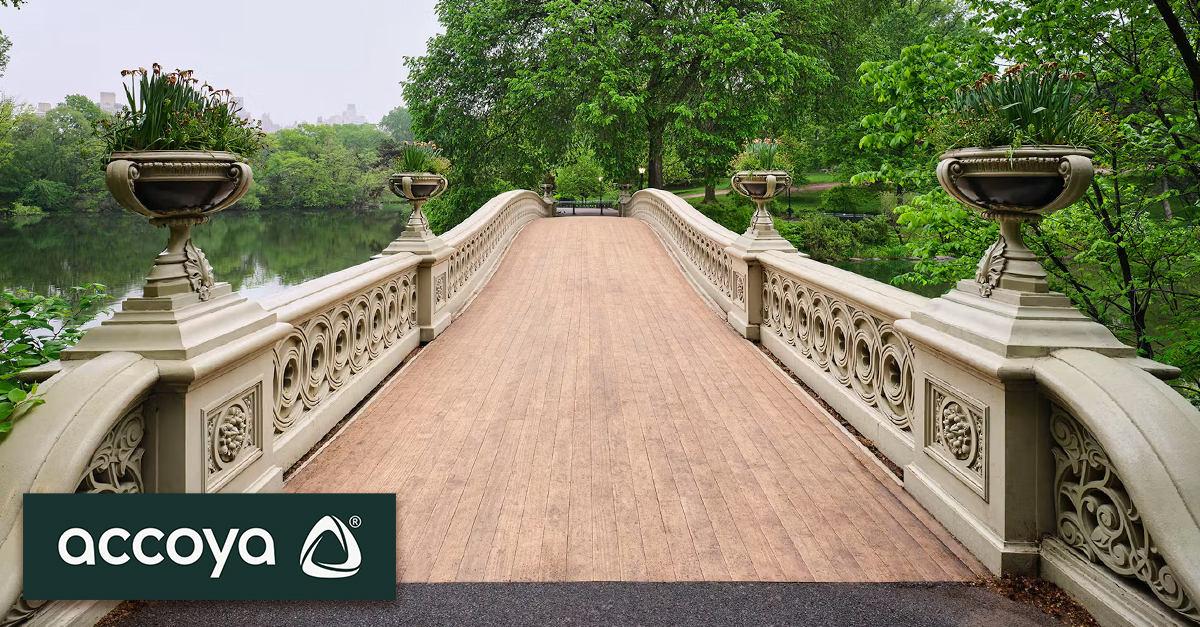
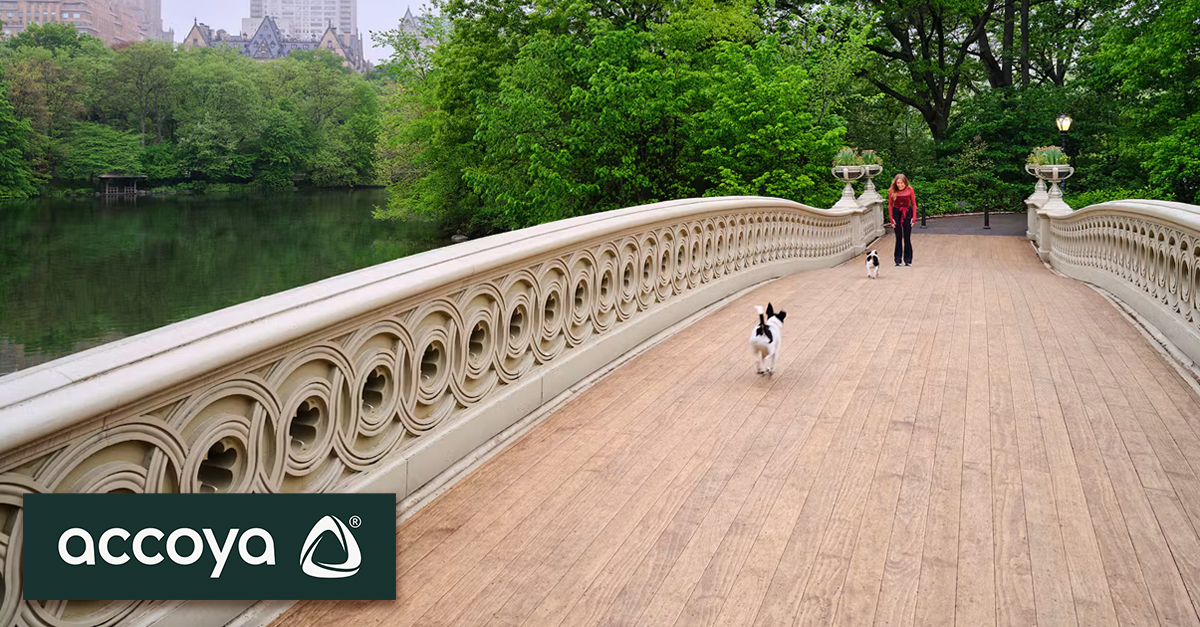
For more than 160 years, Central Park’s Bow Bridge has been one of New York City’s hallmark architectural landmarks. When its aging White Oak decking needed replacement, the challenge went beyond selecting a more durable material. The new decking had to preserve the bridge’s historic character, accommodate its distinctive curvature, and withstand demanding outdoor conditions and constant pedestrian traffic.
Together with Rex Lumber, the Central Park Conservancy selected Accoya®, a high-performance acetylated wood, for the restoration. Rex Lumber supplied and custom-milled the Accoya decking, working with the Conservancy to produce the precise dimensions and specifications required for the project.
Following Bow Bridge’s completion in January 2024, Rex also specified, supplied and custom-milled Accoya for Gothic Bridge, another Central Park cast-iron landmark.
Why the Central Park Conservancy Selected Accoya
Accoya is solid wood modified through a process called acetylation. Unlike conventional wood treatments that rely primarily on surface protection, acetylation changes the wood’s chemical structure throughout the material, making it significantly less susceptible to moisture-related swelling and shrinking.
For Bow Bridge, this enhanced dimensional stability was particularly important.
Dimensional Stability Across New York’s Changing Seasons
Outdoor wood contends with fluctuations in temperature and moisture throughout the year. New York’s humid summers, freezing winters, snow, and rainfall create repeated cycles of wetting and drying.
 Conventional wood absorbs and releases moisture as these conditions change, resulting in expansion, contraction, and potentially distortion over time.
On a curved historic bridge, excessive movement can affect the alignment and spacing of the decking, creating additional challenges for appearance, drainage, and ongoing maintenance.
For the Conservancy, Accoya’s acetylation process offered an important advantage over unmodified wood species: a wood decking material capable of maintaining more consistent dimensions through seasonal changes while accommodating the bridge’s distinctive geometry.
Resistance to Rot and Decay
Bow Bridge’s location directly over the Lake added another consideration. While the decking is not submerged, it’s constantly exposed to precipitation, humidity, and environmental moisture.
While routine maintenance and inspections remain necessary for the Central Park landmark, Accoya’s resistance to fungal decay and strong long-term material performance makes it ideal for an exterior application like Bow Bridge, where moisture exposure is unavoidable, and heavy foot-traffic is expected.
Sustainable Sourcing and Historic Preservation
Material performance was only one part of the Conservancy’s decision.
The organization also sought a responsibly sourced wood product consistent with its commitment to environmental stewardship. Accoya is produced using wood from FSC®-certified, responsibly managed forests.
Additional Landscape Architecture in Central Park
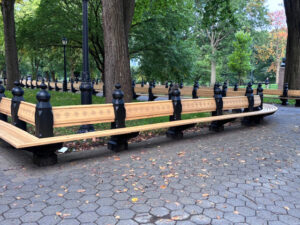 Before Accoya was selected for the restorations of Bow Bridge and Gothic Bridge, Rex Lumber helped introduce the material to the Central Park Conservancy through a different application: park benches.
Rex Lumber regional sales representative John Campana first approached the Conservancy about using Accoya for bench construction. Rex supplied the wood to a Connecticut-based fabricator and longtime partner of New York City Parks & Recreation, which then crafted and installed custom benches in Central Park.
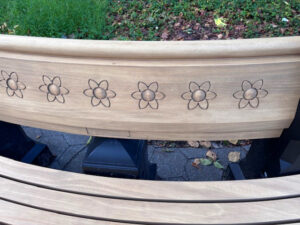
The benches’ curved wood seats and backs were milled, shaped, sanded, and prepared to fit the setting. Decorative floral details add character to the backrests, showing how Accoya can accommodate the custom fabrication and detailing required for prominent public spaces.
 But appearance was only part of the equation. Central Park benches face year-round exposure to rain, humidity, temperature swings, and frequent public use. For the Conservancy, they provided a practical opportunity to see how Accoya performed in the park itself, not just how it measured up on paper.
“Accoya performed very well when used for benches within Central Park,” Campana explained.
The Conservancy also experimented with Accoya and other modified woods elsewhere in the park as it assessed materials for demanding outdoor applications. Accoya’s resistance to decay, dimensional stability, and responsibly sourced wood aligned with the organization’s preservation and environmental priorities. Its observed performance in the bench application helped build confidence in the material.
When the time came to replace Bow Bridge’s worn decking, the Conservancy was therefore considering a material it already knew from firsthand experience. Accoya offered the durability and stability the project called for, along with the ability to be machined to the bridge’s required dimensions. The material was subsequently selected for Gothic Bridge as well.
For Rex Lumber, the progression from supplying Accoya for custom benches to preparing decking for two historic landmarks illustrates the value of introducing the right material early, then supporting the project-specific work needed to put it to use.
Accoya’s documented durability and stability provided a sound case for the material selection. For a historic landmark where replacement work requires careful coordination, the potential to extend the time between major decking replacements is particularly valuable.
Bow Bridge: Preserving a 160-Year-Old Landmark
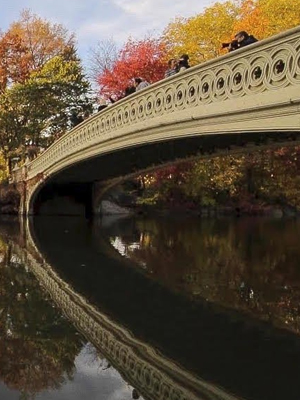
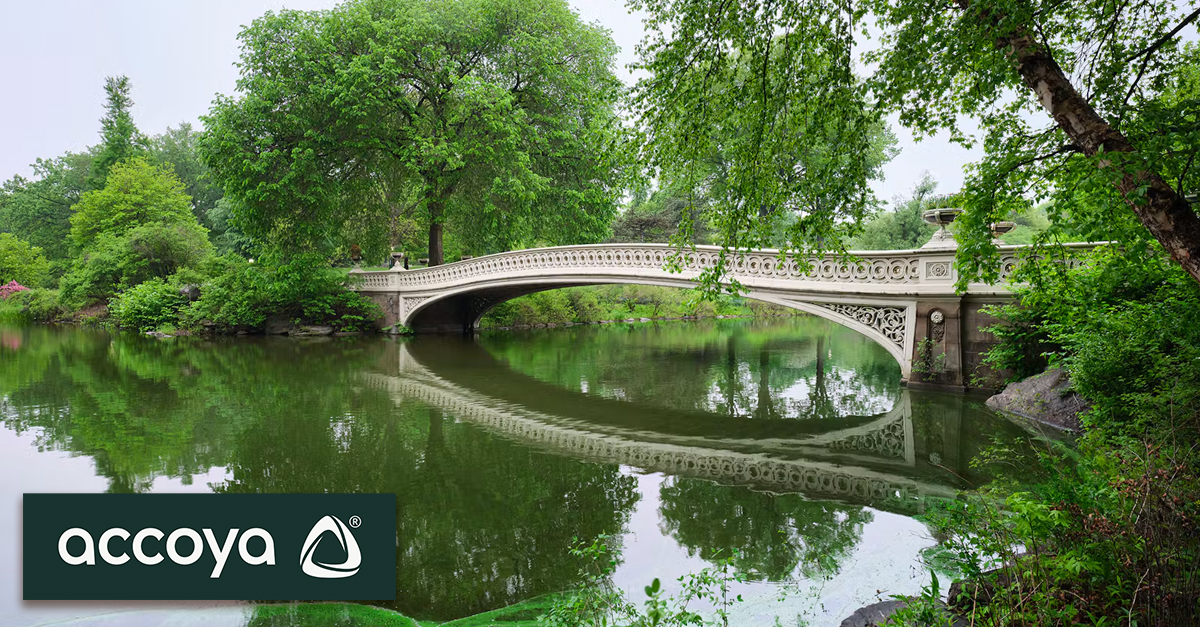
Built in the early 1860s, Bow Bridge is the oldest cast-iron bridge in Central Park (also one of the only) and the second-oldest cast-iron bridge in the United States. Designed by Calvert Vaux and Jacob Wrey Mould, the bridge is part of Central Park’s original landscape architecture. With an elegant cast-iron arch that resembles an archer’s bow, it spans the Lake and connects the Ramble to Cherry Hill and the paths toward Bethesda Terrace.
Unlike the park’s other ornamental cast-iron bridges, which cross the bridle path, Bow Bridge crosses water. Its sweeping profile, decorative railings, and picturesque setting have made it one of Central Park’s most photographed features.
Preserving that appearance, while honoring its unique history requires ongoing attention to the materials that make up the structure.
Over the decades, Bow Bridge has undergone several rounds of repair and restoration, including the installation of new wood decking in 2015.
By late 2023, the Southern Yellow Pine decking installed during that earlier restoration required replacement. The Central Park Conservancy closed the bridge in November 2023 to address the worn walking surface and conduct additional maintenance.
For the replacement decking, the Conservancy sought a material that could better accommodate the exposure, movement, and maintenance demands associated with a heavily used outdoor landmark.
At the same time, the replacement needed to blend visually and functionally with the bridge’s original construction.
That combination of performance requirements and historical accuracy made Accoya an appealing choice.
From Material Specification to Historic Reproduction: Rex Lumber’s Role
Selecting a high-performance wood was only part of the restoration process. The replacement decking still needed to be manufactured to match the bridge’s historic design.
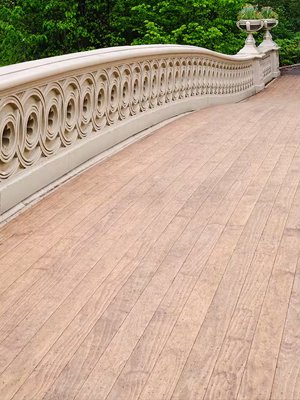
The Central Park Conservancy used archival photographs to establish the original decking dimensions, plank arrangement, and spacing.
Those details provided the Rex team with specifications for the replacement Accoya boards.
This distinction is particularly important in historic restoration, where maintaining original proportions and material detailing can be as critical as the performance of the replacement product.
Precision Milling for Project-Specific Requirements
 At Rex Lumber, our role extends beyond providing specialty wood products. We work with architects, specifiers, and commercial customers to understand how those materials need to be prepared for their intended applications.
For Bow Bridge, that meant translating the Conservancy’s historic decking requirements into accurately milled Accoya components.
Rather than changing the design to accommodate standard stock decking, Rex Lumber utilized its in-house, custom millwork capabilities to provide the Conservancy with project-specific tongue-and-groove, and surfaced-four-sides planks, matching the historic dimensions and configuration of the bridge’s original wood flooring.
Accoya’s machinability made it well suited to this process. Despite its enhanced durability and dimensional stability, the material can be cut, surfaced, and profiled using conventional woodworking equipment.
This allows us to produce architectural wood components that respect the visual character of the original deck, and meet precise dimensional requirements while retaining the performance characteristics of the acetylated material.
Accoya’s established performance characteristics combined with Rex Lumber’s ability to custom-mill the specified decking provided a practical solution to the requirements of the Conservancy, who described the experience of working with the material and Rex Lumber as “smooth and seamless.”
The result is a beautifully restored Bow Bridge that honors its original craftsmanship and historic character, with the added durability and stability of Accoya to help preserve it for generations to come.
Gothic Bridge: Extending Accoya’s Role in Central Park Preservation
Following the completion of Bow Bridge, the Central Park Conservancy turned its attention to Gothic Bridge, officially designated Bridge No. 28.
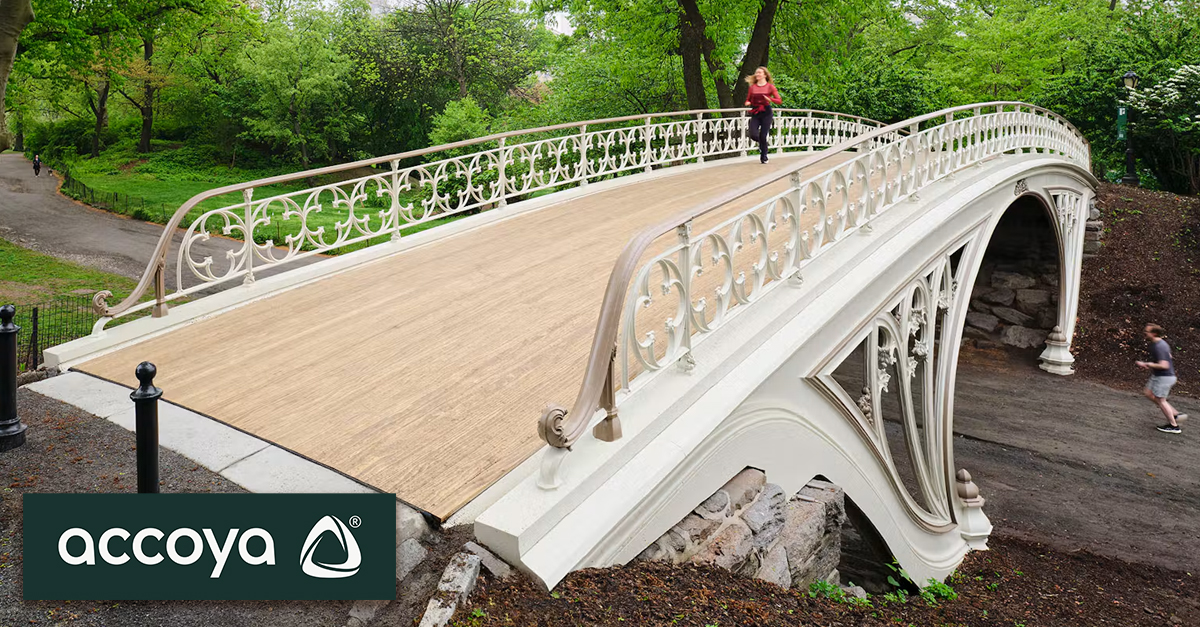
Designed by Calvert Vaux and constructed in the 1860s, Gothic Bridge crosses the bridle path just north of the Jacqueline Kennedy Onassis Reservoir, near West 94th Street.
An important example of Central Park’s original architectural design, its elaborate cast-iron tracery, distinctive curves, and integration into the surrounding landscape make Gothic Bridge one of the park’s most ornate pedestrian crossings.
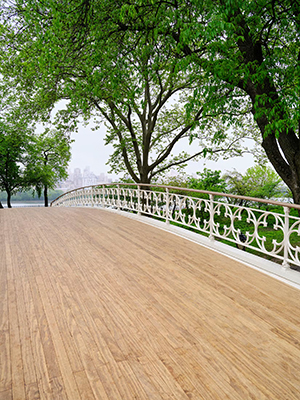 The Gothic Bridge restoration began in 2024 and included extensive work beyond the decking replacement.
The Conservancy did extensive and careful repairs to the cast iron and steel structure to maintain its aesthetics and safety.
And as with Bow Bridge, the walking surface required new wood decking that would respect the structure’s historic appearance.
Once again, Accoya was selected.
Rex Lumber supplied and custom-milled the Accoya decking for Gothic Bridge, supporting the project’s need for historically appropriate wood components with enhanced durability and dimensional stability.
The restoration was completed in 2024.
The projects demonstrate how the same high-performance wood can be adapted to different purposes and architectural conditions through project-specific preparation.
What These Restorations Demonstrate About Specifying Accoya
For architects and specifiers, the Bow Bridge and Gothic Bridge restorations reinforce the importance of pairing high-performance materials with precision manufacturing and early supplier coordination.
Rex Lumber’s ability to custom-mill Accoya helped bridge the gap between the original architectural requirements and the performance benefits of modern acetylated wood where traditional wood would be limiting.
Early Supplier Coordination Supports Better Project Outcomes
When specifying specialty wood products, material selection should not be separated from manufacturing and fabrication considerations.
At Rex Lumber, we encourage architects, millwork shops, and project teams to involve us early, particularly when custom profiles, historic reproductions, or unusual installation conditions are involved.
Early conversations allow us to review material requirements, determine appropriate milling options, and identify opportunities to prepare components before they reach the project site.
For projects that call for additional preparation, our broader wholesale custom millwork capabilities include custom profiling, sanding, and factory finishing services.
The objective is to provide more than the specified lumber. It is to ensure the material arrives appropriately prepared for its intended application.
Preserving the Past with Materials Made for the Future
For Rex Lumber, supplying and preparing the material for these landmarks was an opportunity to contribute directly to the preservation of two important pieces of New York City’s architectural history.
For Rex’s John Campana, the work was especially meaningful.
“Supplying material for iconic landmarks is always special, but when it’s in your own backyard and you get to walk across the bridge after the project is done, it’s really something special.”
Projects like these reflect what we value most at Rex Lumber: understanding the requirements behind a specification, applying our millwork expertise, and helping customers turn specialty wood into finished architectural components.
Planning a Historic Restoration or Custom Accoya Project?
Rex Lumber supplies Accoya and provides custom millwork services for architects, commercial specifiers, lumber dealers, and millwork manufacturers.
Whether your project calls for historic decking profiles, custom exterior mouldings, or precision-milled architectural components, our team can help evaluate material options and manufacturing requirements early in the process.
Explore Rex Lumber’s Accoya offerings or contact our team to discuss your project.
Frequently Asked Questions About Accoya and the Central Park Bridge Restorations
Why was Accoya chosen for the restoration of Central Park’s Bow Bridge?
The Central Park Conservancy selected Accoya for its dimensional stability, resistance to rot and decay, responsible sourcing, and ability to be milled into historically accurate decking profiles. The material also needed to accommodate the bridge’s distinctive curvature and withstand New York City’s seasonal weather conditions.
What role did Rex Lumber play in the Bow Bridge and Gothic Bridge restorations?
Rex Lumber supplied and custom-milled the Accoya wood decking used in both projects. For Bow Bridge, Rex worked with the Conservancy to manufacture tongue-and-groove decking and surfaced-four-sides planks matching the original historic dimensions. Rex also supplied and custom-milled the replacement Accoya decking for Gothic Bridge.
What is Accoya wood, and how is it different from traditional lumber?
Accoya is solid wood modified through a process called acetylation, which changes the wood’s chemical structure to reduce moisture absorption and improve dimensional stability and decay resistance. Unlike conventional surface-treated lumber, Accoya is modified throughout the wood, allowing it to be machined into custom profiles while maintaining the benefits of the modification.
When were the Central Park Bow Bridge and Gothic Bridge restorations completed?
The Bow Bridge decking restoration was completed in January 2024 after the bridge closed in November 2023. Gothic Bridge underwent restoration work later in 2024. The Central Park Conservancy confirms both projects were completed that year.
Can Accoya be used for other historic restoration projects?
Yes. Accoya is suitable for many historic restoration applications where real wood, dimensional stability, decay resistance, and custom machining are important. Depending on project requirements, applications can include decking, exterior trim, windows, doors, siding, and architectural mouldings. Material selection and detailing should always account for the specific exposure and construction requirements.
Does Accoya come with a 50-year warranty?
Accoya carries a manufacturer warranty against rot and decay for up to 50 years in qualifying above-ground applications and 25 years in qualifying ground-contact or freshwater applications, subject to the manufacturer’s terms and exclusions. This is not a guarantee against surface wear, mechanical damage, or routine maintenance requirements.
Does Accoya decking require maintenance?
Yes. Although Accoya offers exceptional resistance to decay and significantly reduced swelling and shrinking, exterior decking still requires regular cleaning, inspection, and appropriate maintenance. Surface weathering, foot traffic, drainage conditions, and the presence of dirt or biological buildup can affect its appearance and slip resistance.
Can Rex Lumber manufacture custom Accoya profiles for commercial projects?
Yes. Rex Lumber offers custom milling and profiling for Accoya, including decking, trim, mouldings, cladding, siding, and architectural components. We work with architects, millwork shops, and commercial customers to determine appropriate profiles, dimensions, tolerances, and preparation requirements for their applications.